Search This Blog

Showing posts with label Passover. Show all posts

Monday, March 19, 2012

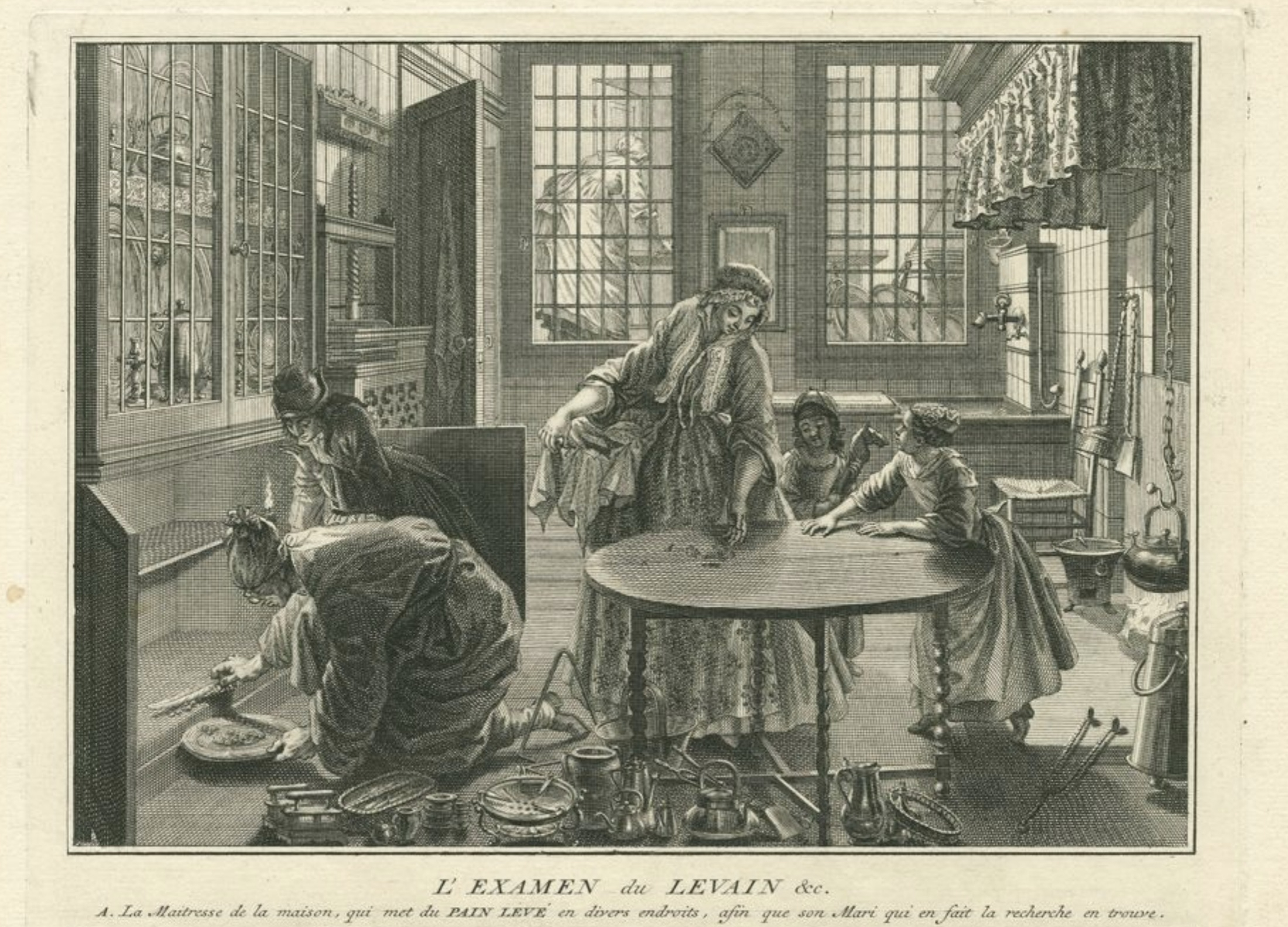
How to Kasher Your Kitchen for Passover

Who by Water…Who By Fire
The Simple Guide to Kashering Your Kitchen for Passover
(or just Kashering your Kitchen)

By Rabbi Yehuda Hausman


Disclaimer: 1. It may not be headache-free or stress-free, but it is will be less of a headache and much less stressful than the competition. 2. This guide should not be used to replace communal norms and standards that  have been established in your local synagogue, community, or by your local rabbi. 3. Similarly, one should do one's utmost to follow family traditions, even if it means extra work.

Otherwise, here is the link: Who by Water Who by Fire 

Chag Samayach!
 

Wednesday, April 27, 2011

Early Passover: Eat First, Ask Questions Later!?!

Photo Credit: Paula Kirman


The tenth and final chapter of the Tosefta Pesachim appears to ritualize a Passover Seder that in many ways resembles our own. There are four cups of wine, multiple dippings, plenty of food, and quite a bit of stimulating discussion. But what is abundantly clear is that the discussion takes place not before the meal (akin our modern Seder) but after. That's the obvious conclusion, and one that is presented succinctly by Rabbi Judith Hauptman in her article, "How Old is the Haggadah?". She also translates the rudiments of the Tosefta in English at the end of her article, so you can see so for yourself and compare it the Mishnah (of which there is also a digest in English). What I find to be much less convincing is her argument that the Mishnah flipped the order to the one we have today, whereby the discussion takes place before the meal.


I think the evidence points in both directions. As R. Hauptman has already argued in favor of flipping, I shall merely state what I believe to be the evidence that the Mishnah preserves the Tosefta's organization of the evening.


Two or three pieces of Evidence:
(1) MISHNAH PESACHIM 10:3 "They then set [it] before him. He dips the lettuce before yet he has reached the Appetizer for the bread. [Alternatively, the breaking of the bread.] They set before him Mazzah, Lettuce [Hazzereth], and Haroseth and two cooked dishes. Though the Haroseth is not compulsory. R Eleazar Son of R. Tzadok said: It is compulsory. And in the Temple they used to bring the body of the Passover-Offering before him.

משנה. הביאו לפניו מטבל בחזרת עד שמגיע לפרפרת הפת. הביאו לפניו מצה וחזרת וחרוסת ושני תבשילין, אף על פי שאין חרוסת מצוה. רבי אליעזר (בן) +מסורת הש"ס: [ברבי]+ צדוק אומר: מצוה. ובמקדש היו מביאין לפניו גופו של פסח.


The language of "set before him" הביאו לפניו (would seem to indicate that the food is brought out not simply for appearance sake, but for actual consumption. See Mishnah Berachot 6:7:
משנה ז

[הביאו לפניו מליח בתחלה ופת עמו מברך על המליח ופוטר את הפת שהפת טפלה לו

Also the examples found in Tosefta Berachot 4:4,13,16. (Lieberman Edition)


Furthermore, as the above Mishnah precedes the Mishnayot that describe the rituals of asking the "Four Questions" and liturgical obligation to mention Pesach, Mazzah and Marror, one can conclude that eating the various foods including Mazzah took place before the discussion. ("Four Questions" is in quotes because originally there were only three as can be seen in early manuscripts, for example: Valmadonna Manuscript.)


Also, a number of Rishonim argue as well that the Mishnah above seems to indicate that the meal came before the discussion, see the Mordechai's fabulous comment below. (Although I am not so sure he is right that one can draw any conclusions from the fact that "Mazzah" is in the singular. "Bread" is also in the singular and can refer to multiple loaves in English or Hebrew: "Lechem Mishnah") See also Lieberman's Tosefta Kipeshuto page 654, who notes that R. Meir Rothenberg makes a similar comment regarding our Mishnah.


מרדכי מסכת פסחים סדר של פסח
וממשנה זו [*יש] מדקדקין דאין צריך להיות רק מצה אחת שלימה וכן הסדר שעושין מתחילה שתי מצות ובוצעין האחת ומניחין חציה לאפיקומן ועל חצי האחר מברכין ברכת המוציא ועל אכילת מצה וכן משמע הכא דקאמר הביאו לפניו מצה משמע דליכא כ"א מצה אחת שלימה ואע"ג דבשאר ימים טובים בעינן לחם משנה שלם מ"מ שאני הכא דכתיב לחם עוני ודרשינן (לקמן קטו ב) מה דרכו של עני בפרוסה אף כאן בפרוסה ואימת הוי דרכו של עני בפרוסה בשאר ימים היינו בברכת המוציא שעושה ברכת המוציא על הפרוסה וה"נ הא דקאמר אף כאן בפרוסה ר"ל ברכת המוציא וכן פירש בה"ג שפירש דאף על גב דבעינן לחם משנה מכל מקום אתיא לחם עוני וגרעיה ללחם משנה ואוקמיה אפלגא ולא נראה דלמה יגרע משאר ימים טובים דבעינן לחם משנה שלם
[...]
כיון דתקינו רבנן שלש מצות אכל חדא וחדא נעביד בה מצוה ומההיא (דהביאו) דהכא לא קשה [*דקאמר] הביאו לפניו מצה דמשמע דליכא אלא מצה אחת שלימה דהיינו דוקא בימיהם שהיו עושין הסדר אחר סעודתן ולכך לא היו צריכין אלא מצה אחת שלימה לעשות הסדר עליה דהא כבר בירכו ברכת המוציא ואכלו כל סעודתן אבל אנו שעושין הסדר בתחלה קודם הסעודה אז ודאי צריך שלש מצות כדפרישית וה"ר מנחם מיוני וה"ר יו"ט ורמב"ם (פ"ח מהל' חמץ ומצה ה"ו) כתבו דסגי בשני מצות ובוצע אחת לשתים ושומר חציה לאפיקומן ומברך על הפרוסה המוציא ועל אכילת מצה והשלימה יעשה כריכה מצה ומרור

(2) The Misnah dealing with the "Four Questions" is a second piece of evidence. It makes no sense (in our Seders as well) for a child to ask about a series of rituals at a point in the evening when none of these rituals have taken place! We have yet to dip twice, (eat bitter herbs), eat mazzah, or eat a roasted paschal lamb!!! So why would the child be encouraged to ask about these things at this point in the evening, before any of these unusual rituals have occurred?


MISHNAH Pesahim 116a. THEY FILLED A SECOND CUP FOR HIM. AT THIS STAGE  THE SON QUESTIONS HIS FATHER; IF THE SON IS UNINTELLIGENT, HIS FATHER INSTRUCTS HIM [TO ASK]: ‘WHY IS THIS NIGHT DIFFERENT FROM ALL [OTHER] NIGHTS. FOR ON ALL [OTHER] NIGHTS WE EAT LEAVENED AND UNLEAVENED BREAD, WHEREAS ON THIS NIGHT [WE EAT] ONLY LEAVENED BREAD; ON ALL OTHER NIGHTS WE EAT ALL KINDS OF HERBS, ON THIS NIGHT BITTER HERBS; ON ALL OTHER NIGHTS WE EAT MEAT ROAST, STEWED OR BOILED, ON THIS NIGHT, ROAST ONLY. ON ALL OTHER NIGHTS WE DIP ONCE, BUT ON THIS NIGHT WE DIP TWICE.’ AND ACCORDING TO THE SON'S INTELLIGENCE HIS FATHER INSTRUCTS HIM.

שנה מסכת פסחים פרק י משנה ד
מזגו לו כוס שני וכאן הבן שואל אביו ואם אין דעת בבן אביו מלמדו
מה נשתנה הלילה הזה מכל הלילות
שבכל הלילות אנו אוכלין חמץ ומצה הלילה הזה כולו מצה
שבכל הלילות אנו אוכלין שאר ירקות הלילה הזה מרור
שבכל הלילות אנו אוכלין בשר צלי שלוק ומבושל הלילה הזה כולו צלי שבכל הלילות אנו מטבילין פעם אחת הלילה הזה שתי פעמים
ולפי דעתו של בן אביו מלמדו מתחיל בגנות ומסיים בשבח ודורש מארמי אובד אבי עד שיגמור כל הפרשה כולה:


(3) Within the Tosefta, there seems to be great stress on making sure that the children stay up after dinner for the discussion part. Thus the Tosefta below. (Is is also cited in the Gemora TB Pesahim 109a): 


תוספתא פסחים, כתב יד וינה, פרק י
ר' לעזר אמ' חוטפין מצה לתינוקות בשביל שלא ישנו ר' יהודה או' אפי' לא אכל אלא פרפרת אחת אפי' לא טבל אלא חזרת אחת חוטפין מצה לתינוקות בשביל שלא ישנו

Tosefta Pesahim, 1st-2nd C. [The “Wien” Manuscript  was copied sometime in the 13th-14th C.) [Seder night...] R. Eliezer said, snatch matzah for the children so they don’t fall asleep. R. Yehuda said, even if they ate but one parperet (appetizer) or dipped but one [piece of] lettuce---snatch matzah for the children so that they don’t fall asleep.
(See Shamma Friedman's review of this Tosefta in Tosefta Atiqta: Mesechet Pesach Rishon #444-446) 

To my mind, it is very striking that the Mishnah mentions nothing about keeping children up. One could read this as evidence that discussion now takes place before the meal, ala R. Hauptman, and thus keeping the children up is much less of a concern. Another hypothesis. The Mishnah has kept the same order as the Tosefta, but it has created something just as enticing as Mazzah snatching, it has legislated the Mah Nishtanah-- a wonderful (post) dinner dialogue to look forward to--where parents ask children and children ask parents: Why was this night different from all other nights? 

In any event, these are my initial thoughts. I think it likely that there is some middle ground that in a later post will need to be tilled and seeded.

The Suffering of the Righteous and Not so Righteous? Adapted from a Sermon: Pesach 4/24/11


Can one quantify suffering? Can one give it a number, weigh it, put it on a scale?
Several weeks ago, Japan’s Nuclear Safety Commission (NSC) decided to elevate its rating for the severity of the Fukishima –Dai’ichi nuclear disaster.
It changed the rating from 5—“very severe”—to 7—the maximum grade for a nuclear accident—’7’ being what was given to the Chernobyl reactor meltdown, the very worst nuclear accident in history.
Of course, many within Japan and outside Japan, criticized the Commission, saying they had exaggerated the significance and severity of the event.
Caving to pressure, Japan’s Nuclear Commision decided to downgrade the rating from 7 to 6, before later upgrading it again to 7.
In reading these reports, one could not help but feel that something was amiss. By way of an analogy, in our zealousness to calculate exactly how many trees had been lost in the wildfire, we lost sight of what was done to the entire forest.
Lives were lost. Many thousands had to evacuate their homes. Hundreds of thousands are without power. There is an environmental toll: Farmland rendered infertile by radiation; water rendered unpalatable; poisoned fish, livestock, fruit, grain… The forest is devastated—how can one put a number to this kind of loss?
There is a point in the Haggadah that (for some) creates a measure of discomfort. It’s in the section of Maggid, where we repeat the plagues aloud, where we praise the great hand of retribution—the Yad Chazaka, with which God struck Egypt.
The section culminates in one of the strangest debates in rabbinic literature, a disagreement between R. Yossi, R. Eliezer, and R. Akiva.
 ‘Says R. Yossi, the Egyptians were struck by ten plagues in Egypt and 50 by the sea. Says R. Eliezer, they were struck by 40 plagues in Egypt and 200 by the sea. No, opines R. Akiva, it was much worse than that: 50 plagues in Egypt and 250 amidst the sea.’
In other words, shall we give it a 5 (very severe), a 6 (unbelievably severe), or 7 (the worst imaginable).
By comparison, the Japanese estimating the extent of damage caused by their failed nuclear reactor, makes a great deal of sense; in order to rally the appropriate response, they need to first gage the extent of the damage. 
But here at the Seder, assessing the retribution exacted long ago against Mitzrayim, feels like nothing less than gloating.
There were plagues of blood and hail, pestilence and darkness, Egypt’s firstborn were struck down; we read this morning how its footmen and cavalry are swept away amidst the towering sea.
We get the picture. Do we really need exact numbers?
In response, I believe there are two approaches.
The first, alluded to above, might be characterized by a sense of embarrassment: It is somewhat inappropriate to gloat at every trouble that struck Egypt—to calculate down to the last frog, lout, and locust what was brought upon them.
 The second view might be characterized by righteous satisfaction: Mitzrayim got what it deserved. As they did to us, God did unto them.
 Don Isaac Abarbanel expressed both views in a familiar comment on the Haggadah: “The reason why we pour a few drops of wine from our glass as we read aloud the ten plagues is to attest that our joy is not complete, as our salvation had to come about through the punishment of others; even though it was just and right that they be punished through these terrible acts, nevertheless,  
  בִּנְפֹל אויביך (אוֹיִבְךָ), אַל-תִּשְׂמָח; 
“Rejoice not, when your enemy falls.””
In a way this tension continues into the next section of Dayenu:
“Had God taken us out of Egypt, but had not exacted retributions upon them, Dayenu.”
Had God exacted retributions, and not destroyed their gods, Dayenu.
Had God destroyed their gods, but not killed their firstborn, Dayenu.”
Yes, we sing happily that they got what they deserved. At the same time, we also recite, Dayenu. “It’s enough!”
However, I shall conclude with one view, and not the other.
As many of you know, this month marked the 150th anniversary of the outbreak of the American Civil War.  The conflict “remains the deadliest war in American history, resulting in the deaths of 620,000 soldiers and an undetermined number of civilian casualties. Ten percent of all Northern males 20–45 years of age died, as did 30 percent of all Southern white males aged 18–40.” (Wiki)

At the close of the war, many asked why was it necessary for there to be so much suffering?  Surely, the cause was good and just...freeing America’s black slaves was a moral obligation, but why did it have to come at such a steep price in blood?  
And here I leave you with the words of Abraham Lincoln. From his second inaugural address:
“If we shall suppose that American slavery is one of those offenses which, in the providence of God, must needs come, but which, having continued through His appointed time, He now wills to remove, and that He gives to both North and South this terrible war as the woe due to those by whom the offense came, shall we discern therein any departure from those divine attributes which the believers in a living God always ascribe to Him? Fondly do we hope, fervently do we pray, that this mighty scourge of war may speedily pass away. Yet, if God wills that it continue until all the wealth piled by the bondsman's two hundred and fifty years of unrequited toil shall be sunk, and until every drop of blood drawn with the lash shall be paid by another drawn with the sword, as was said three thousand years ago, so still it must be said "the judgments of the Lord are true and righteous altogether."
[In case you didn’t catch the last part:]
“until every drop of blood drawn with the lash shall be paid by another drawn with the sword, as was said three thousand years ago, so still it must be said "the judgments of the Lord are true and righteous altogether."